

Reader warning: Discussion of suicide
In one sentence, The Noisy Brain encourages people to get their mental and emotional health experiences out into the open by writing them down and sharing them. The concept is to use these ‘writings’, craft them into lyrics, and turn the lyrics into songs.
Musicians from all over the world are adopting these shared experiences and making them into songs. In just two years, The Noisy Brain (TNB) has amassed twenty finished songs and demos with roughly forty in progress around the world.
TNB plan to release some of these songs and the stories that inspired them as an album and documentary series. Each song and piece of writing shared with us helps towards raising awareness and educating us all on the various mental and emotional health issues people experience.
This whole movement started, as these things often do, when something broke. What broke, exactly, matters slightly less than how the pieces are put back together.
The power of creativity as a tool for taking care of
mental health
Do you know Kintsugi? What sounds like a cool band name is actually the Japanese art of repairing broken pottery with gold. Kintsugi highlights the breakage, rather than hiding it as something to be ashamed of.
A break becomes a badge of honour, the object now has a story to tell – an indication of qualities that only a lived experience can bring. In Japan, Kintsugi is also used as an analogy when appreciating the beauty and strength in the efforts of someone who picks up the pieces and works through traumatic events in their life.
Stumbling upon Kintsugi, just when I needed to, made me understand that we all break. It’s the most normal thing in the world. What matters is how we put the pieces back together. It’s what shapes and strengthens not just ourselves, but those that witness its possibility.
I didn’t always know these things, obviously.
A few years ago, the cracks started to reappear in my own story. We tend to ignore them, don’t we? Instead, we believe that any problems are best kept to ourselves, rather than expressed.
In cliché rock ’n roll style, I was burning the candle at both ends, qorking hard and using alcohol to escape from and to medicate my noisy brain. I became stuck in a seemingly unending fog of depression and suicidal thoughts. These intrusive thoughts became a huge part of my life. Any moments of relaxation or fun would suddenly be interrupted by terrifying gasps – as if remembering something crucial that I’d forgotten to do, as if the anxiety was feeling jealous.
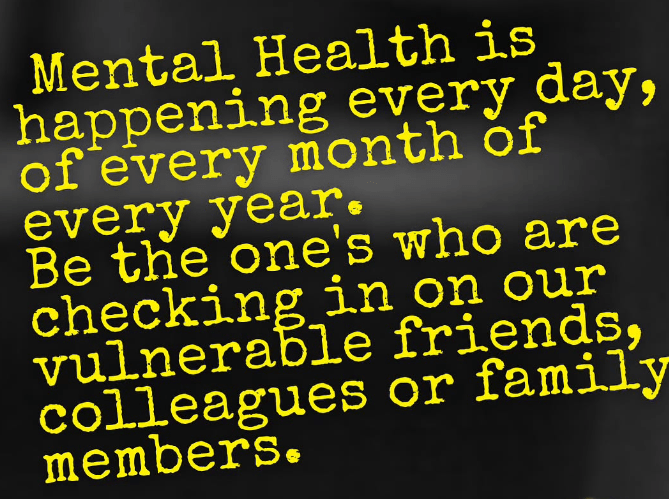
Image Credit: The Noisy Brain
Thoughts of how to make it all stop were always lurking, ready to turn anything at all into a signpost to the same hopeless narrative. At the cinema with my wife, I’d glimpse a bridge or tall building during the film. The gravity of ever-present anxiety immediately took me hostage, down into a rumination on nearby places for me to end it all. I’d picture the exact locations. Where I’d land. Where people might find my final resting place. All this whilst eating popcorn with one hand and my wife holding the other.
I’m fairly sure I was never going to go through with any of these plans but the
fact that I couldn’t type that sentence with the word ‘definitely’ makes for uncomfortable
writing. Those intrusive thoughts that stole my focus led to some of the most
terrifying moments of my life.
I’m not the first person to say this, but I wish I’d known then what I know now: they’re only thoughts. We are not our thoughts. They are fleeting, not truths that need to be acted on. Most of all – if they aren’t released, shared, spoken out, they bounce around and get bigger. They warp out of proportion and block out any light.
Now, I consciously pause. I recognise them for what they are; unhelpful thoughts, not truths. I’m less triggered to react. I let them go – by writing and talking to friends and professionals. I get help. (Yeah – help. That thing that most of us are coded to think is ‘cheating’ – which is one lie that needs to end right now).
Back then, back in the fog, I didn’t know what I didn’t know. I couldn’t give myself care. Coping with too much, bottling it all up for too long, pushed me through anxiety and into a kind of paranoia. In that state, nothing makes sense and we grope for meaning, and the warped thoughts take on a desperate, dark logic. ‘It’s everyone else making it worse.’
And so, one night after drinking, I got into an argument over something small that in my confused state of mind, seemed so big. Something that, on a regular day, would be nothing. But, those ‘noisy’ thoughts were loud, ready, waiting, and unfortunately I reacted to them. I did something I instantly regretted. I lashed out. That’s when things broke.
I had to go to court. But, I was also judged via a social media shitstorm, complete with death threats against me and my family. Six dark months followed.
In my self-imposed lockdown (before lockdowns were cool), I found that hiding away couldn’t stop what I’d set in motion. I found something else; it didn’t stop good caring people from reaching out. Even those people that I least expected, wanted to help me. I immediately knew that the only correct reaction was to accept help and openly seek to sort out my mixed up mind.
From that moment things started to change. I started to change.
I opened up; to my wife, to my family and friends. I sought out therapy, discovered (at 47yrs old) that I’d been masking ADHD all my life, was diagnosed with a major depressive disorder, had further counselling, and then, after quite the journey, ended up serving a short sentence in prison.
Yep. Prison.
It was around then that I found Kintsugi, and it continues to define my recovery. Picking up the pieces, putting them together. However, instead of keeping quiet, I started highlighting the experience, to enable and encourage others to open up. It’s a framework for being able to acknowledge what happened, what I did, and why – without letting the negative thoughts use it as fuel for self hate.
In the long run, it’s those flaws that make me who I am. From that comes strength.
Thankfully things can always change. Happily, these changes have brought me to a situation where I’ve found interest and purpose with The Noisy Brain in raising awareness and encouraging others with Mental and Emotional Health Issues (MEHI) to open up.
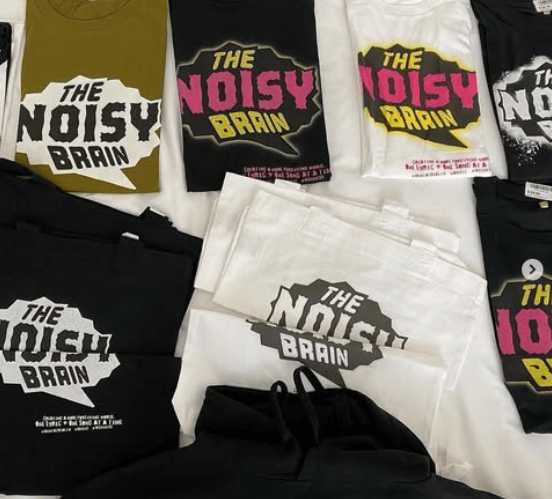
Image Credit: The Noisy Brain
I do what I do, and I take care of myself in the way that I do, to let others witness and be encouraged to embrace their own flaws as experiences to strengthen them, not be hidden away in shame
Whatever your past actions may have been, remember that you can make a difference during whatever you chose to do within the now, and during the future.
Through The Noisy Brain, I actively encourage people to share their thoughts, let them out so that they don’t bounce around and get all warped inside. When we write about them, people relate and we feel validated. When we turn them into songs, we’re putting the pieces together and we turn them into powerful positives. We’re helping each other on journeys of Kintsugi and taking steps towards finding unexpected strengths.
Check out The Noisy Brain on their socials or download their app.
Featured Image Credit: The Noisy Brain



 The Mourning Paper