
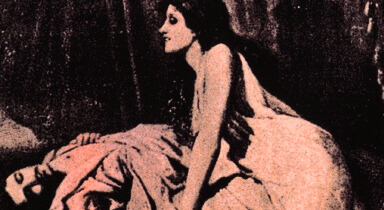
Sheridan Le Fanu’s 1872 novella, Carmilla, explores queer attraction and arguably warns against the deadly consequences of female sexuality.
It was one of the first literary pieces to explore lesbian desire, and Le Fanu’s work, without a doubt, has its biases. Carmilla was written in the 19th century, an era of time that associated homosexuality with deviant behaviour, reflected in the gothic and foreboding atmosphere that hopes to provoke unrest in the reader.
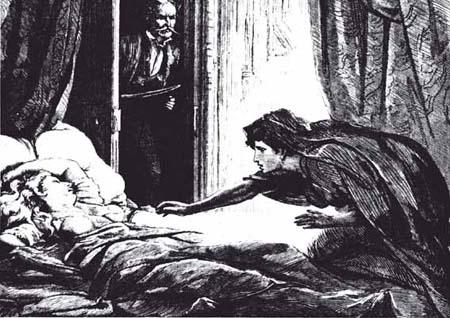
Despite this, Carmilla has become an icon within the lesbian community.
It could be argued that through the complex seduction, love and power of the two female leads, Laura and Carmilla, the book incidentally develops a time-period accurate depiction of being a queer woman in the Victorian era.
The interactions between the two characters are rooted in desire and intimacy. Their first encounter was within a dream format from Laura’s perspective; she has a dream about an alluring woman, quoting it “as if two needles ran into my breast very deep at the same moment.”
It’s been suggested that Laura, from the beginning, was presented to have a repressed,
queer sexuality. The sensual yet dangerous act is a juxtaposition reflecting how being queer in the 19th century was so taboo, an act sworn to secrecy.

Image Credit: Pushkin Press
From this angle, it becomes clearer to see how sapphic readers may find relatability within her character.
Carmilla, however, is read by many sapphic readers as being a symbol of liberation. The
vampire’s personality is passionate as it is dominant; it defies societal expectations for a
woman. From a queer lens, this encapsulates the female desire to break free from the
chains of a patriarchal society.
Arguably, her vampirism is a metaphor for her deviant sexuality. During the era it was written, it was unthinkable to publish a story about same-sex love. Instead, authors often resorted to portraying that type of relationship through the existence of monsters.
The deadly aspect of their love transforms into a deep possession on Carmilla’s
side. This obsession causes a deep sickness to take over Laura.
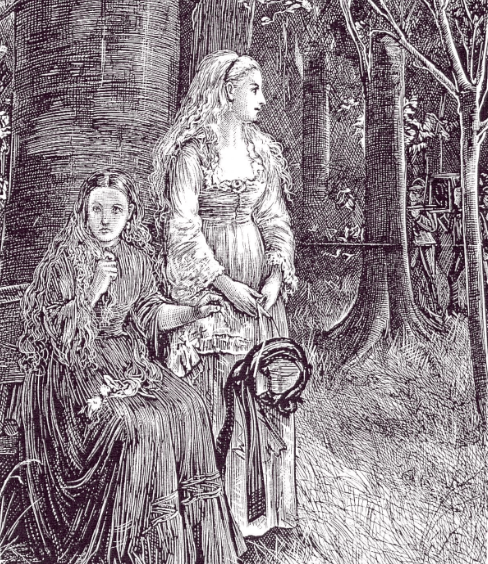
The implications become clear – Le Fanu was correlating lesbianism to a deep sickness that needed to be cured.
Throughout the novella’s long lasting reign in the literary world, the importance of the
author’s intended meaning has come into question. On one hand, it’s important to
understand the context of the media we consume. Alternatively, can’t we, the readers, create our own meaning?
Despite some critics arguing that literary pieces cannot be separated from the author, Carmilla‘s cult popularity diverts from this idea and has proven that literature can be interpreted with vast differences, depending on an individual’s perspective.
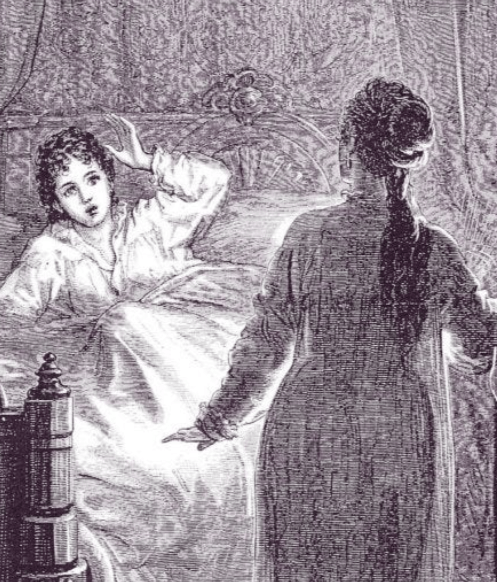
Queer and feminist readings of Carmilla undeniably conquer Le Fanu’s original message of the story which proves that literature is prone to transformation through time and the context through which the text is read.
Today, Carmilla endures as a lesbian icon because of what the readers made it. This
literature reveals our power to find alternative meaning in classics and rebuild its
foundations, making it more relevant to modern times.
The novella is a reminder of queer lives in the shadows, hidden yet undeniably present,
ready to be seen through a queer microscope that can unravel its beauty.





 The Mourning Paper