
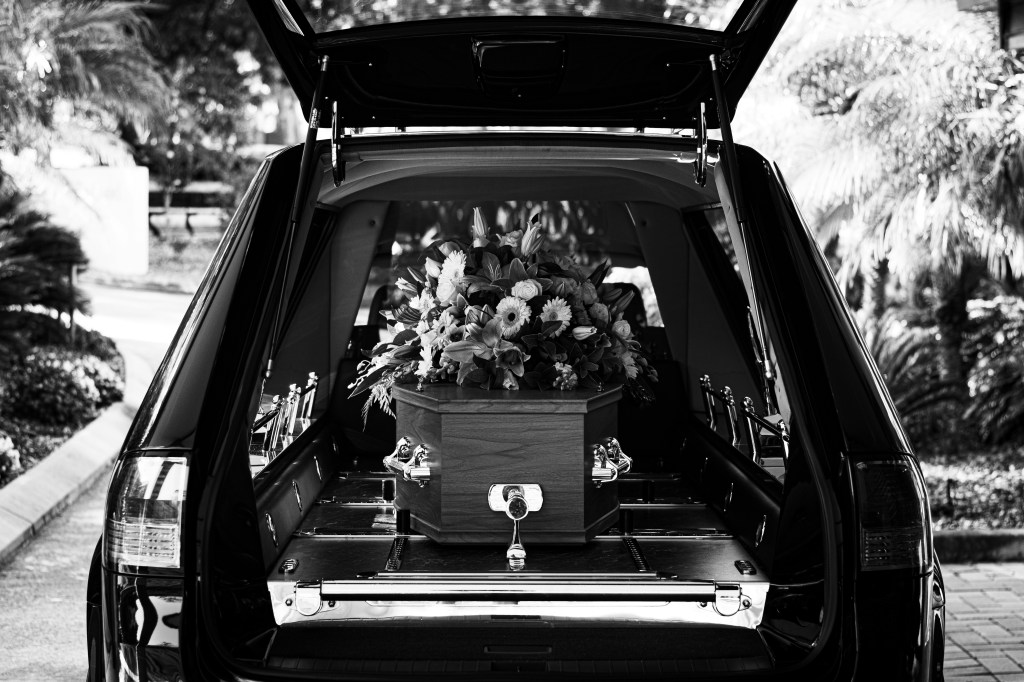
I work at a funeral parlour as a pallbearer or an “FSO”, if we’re being pretentious. During the day, I carry coffins at funerals, and at night, I collect the dead.
I’m the youngest worker in the county, at least within my company, so sometimes comments are made about my age. They wonder out loud why I’d choose to spend my younger years surrounded by death. “You’ll see enough of it when you get older”, they say.
In all honesty, I found the idea fascinating. I have always believed that there is beauty in the darker aspects of life. I thought there were lessons to be learned from them.
So at 1 AM on a Friday, I sent my CV through Indeed, thinking mainly that this job would lead me to some deeper understanding of the universe and my place in it. What a silly idea that was.
Within my first hour at the job, they showed me the body of a woman who had been dead for two weeks. Her skin was thin and dried, yellow and purple, all her veins and bones peering through at me. Eyelids and mouth hung open, eyes shrivelled and cloudy, like pebbles in egg cups.
It was sickening. I couldn’t bring myself to meet her gaze without feeling dizzy. I stared at her clothes as the staff talked to me about the day-to-day on the job. She was wearing a bright pink jumper. It looked clean and cosy, like it would’ve made a nice gift for my grandma if there hadn’t been a corpse laid in it.
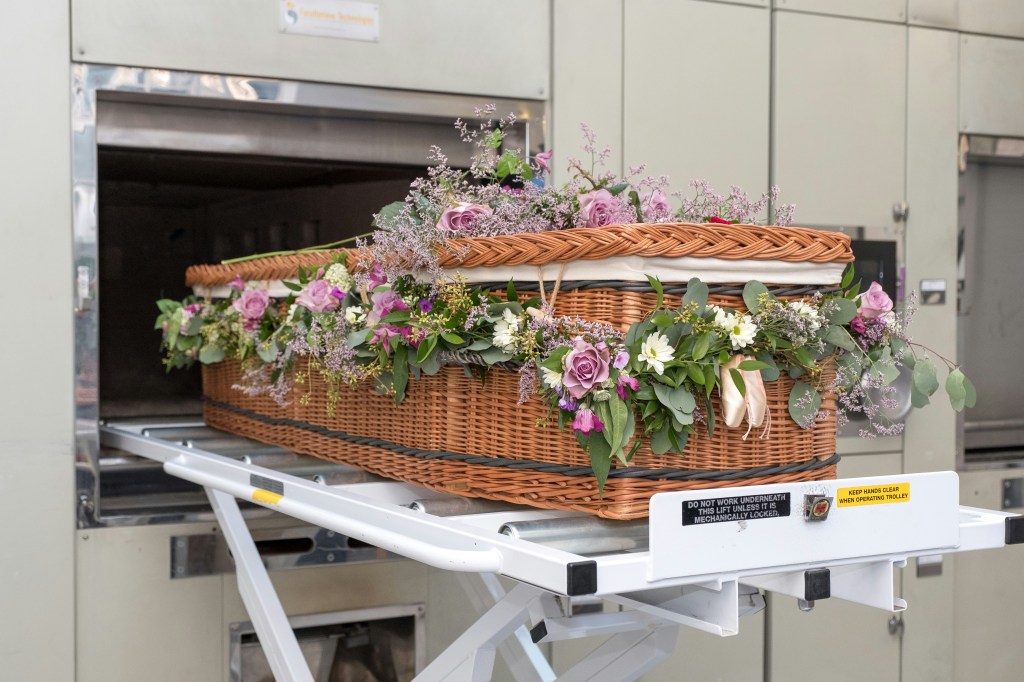
Image Credit: The Good Funeral Guide / Unsplash
We’ll call her Mavis. Her will stated that she didn’t want a service, so they cremated her and her pink jumper before sunrise the following Wednesday. There’s a cardboard box with all that’s left of her out there somewhere.
On my second day, they showed me the body of a man who had been dead for a month. His skin was green and had been eaten away in places by a kind of black rot. He was naked, and I saw every bone there was to him; he was so taut and thin. I never learnt his name or what they did with him, but he likely shared Mavis’ fate. Shortly after that, I watched someone scrape dried blood off a mortuary tray with a butter knife.
“We had a chap last week who exploded a little bit. I missed this spot, but it’s gone hard now and I can’t seem to get it off”, they explained. No one but me seemed phased by any of it.
For a couple of days, I seriously wondered if I could bring myself to show up again, but I thought giving up without seeing it through would be to rob myself of the wisdom this job could bring.
Later on, the man with the butter knife shared with me how he, too, had struggled to process the job at first. He told me how he started working there in his 60s and said that after a few months, he noticed he was regularly seeing the bodies of people younger than him.
“I started to realise that I don’t have that much time left. I’ll be on this table soon,” he said as we stood over the deceased.
I asked, “So then what? What did you think after that?”, eager for him to bestow his wisdom upon me.
“Nothing, I just got over it.” I hated that answer.
During the first few weeks, I tried so hard to honour all in our care. I spoke very little around them, taking care to learn and remember their names. I grieved for them all in my own small ways, hoping the favour would be returned one day.
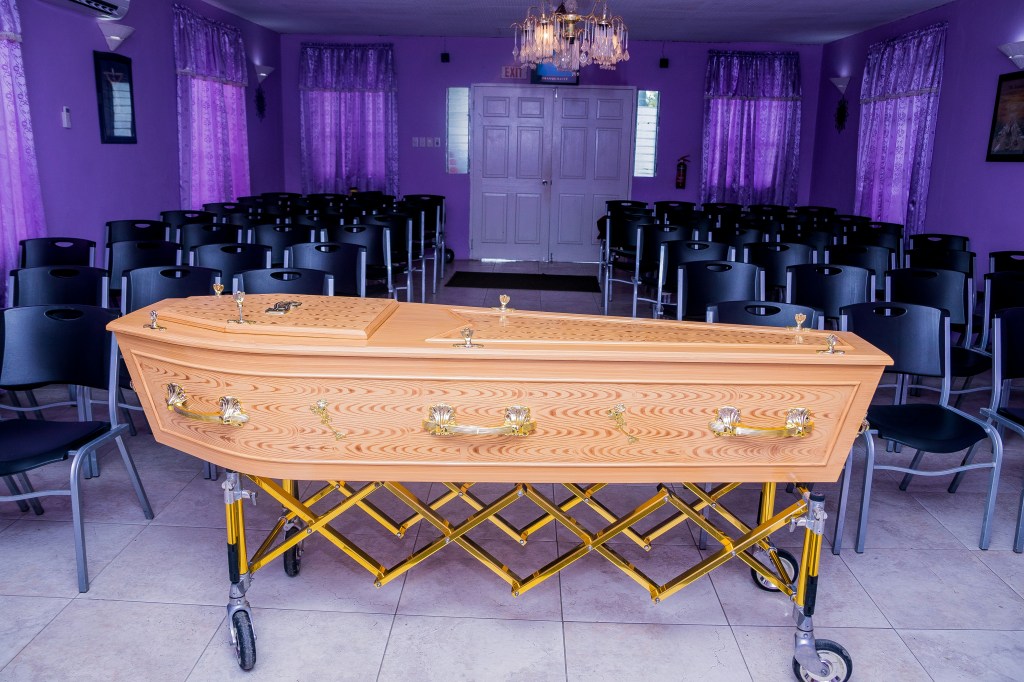
Image Credit: Alex Williams / Unsplash
I was so anxious when I first started. The ground at every service felt like jelly, and I worried most days that I would faint at some point. I’d take deep breaths and count back from 20 to stop myself from going too dizzy. As the time marched on and the bodies came and went like luggage on a conveyor belt, I didn’t need to count my breath. I didn’t need to ask every day if I had made a terrible mistake. It all just becomes normal, and there is absolutely nothing you can do to stop it.
The body of someone’s father becomes just a body, and a body becomes just a thing. A coffin becomes just an expensive box, sometimes heavy, sometimes not. It became easy to sit alone with the deceased.
The reality is, you can only be upset by the same thing so many times. When you boil away the flesh, odour and ornaments, it is just a service job like any other. We use the same refrigerator units for our mortuaries as one of the largest food retailers in the country. I know this because I used to work there too. I stocked meat, so in that way, not too much has changed.
In my time here, I haven’t learned anything profound or beautiful. I learnt that death is not flattering, not dignified at all. I was told about a woman who worked in the local hospital, how one of her duties as a nurse is to dispose of the stillborn babies. How they’re wrapped up like something from the chippy, and how she doesn’t like fish or children anymore.
I saw what a body looks like as it’s cremated, black and shrivelled like charcoal, bubbling and shrinking down to just bone that breaks at the touch like ashen wood. I learnt what it looks like when someone jumps in front of a train. And in time, I learnt that we’re all just machines of flesh and bone. One day, that machine shuts down, often for no particular reason.
More than anything, though, I’m reminded that one day the machine that is me will stop working too. And when that happens, they’ll put it in one of those fridges I’ve already spent so much of my life in, then an overpriced box that they’ll carry left foot forward, followed finally by an even smaller box which my family might put in a cupboard. Something quaint.
When I think about it like that, which I often do now, it’s hard to worry too much about other things. You do just get over it.
Featured Image Credit: Unsplash


 The Mourning Paper