

The International Gothic Association is an organisation that promotes the study and dissemination of scholarship across all aspects of Gothic studies. The IGA boasts over 500 members from more than 30 countries around the world, including teachers, scholars, students, artists, writers and performers.
According to their official mission statement, their purpose is “to exchange and expand knowledge of and research on the Gothic as widely and effectively as possible.
“It also aims to encourage and support new and young scholars in the area of Gothic studies.”
Founded in 1991, the IGA holds an international conference every two years. Previous locations include England, France, Germany, Canada, the United States and Mexico.
We spoke to Co-President, Dr Xavier Aldana Reyes, to find out more about the day-to-day of running the organisation and how those interested in Gothic culture can get involved.

Dr Xavier Aldana Reyes (Left) and Dr Linnie Blake (Right)
What does a typical day in the role of co-president include, both throughout the year and during conferences?
“Conference days, and the months directly before them, are always a very busy period.” Xavier said.
“They help out with advice and have to prepare for a series of recurring events, such as the annual general meeting. They prepare reports, liaise with the executive board, meet with the book prize and PGR teams, and communicate with the web developer. Some of these duties continue beyond the conferences themselves, when we might also be dealing with funding applications, keeping information and membership lists up to date, collating relevant news and so on. I guess the most important role is to represent the association publicly, like I’m doing for this interview.”
How large is the organisation in terms of members and location?
“One look at the ‘Goth Map’ on our website will show that we are lucky to have members all over the world! As is perhaps to be expected, given that the UK and the US have been quite instrumental in the development of Gothic studies, a large contingent lives in Europe, the US and Canada. We are, however, open to the biennial conference being hosted by any academic institution that can comfortably accommodate the 150-350 members who usually attend the event.”
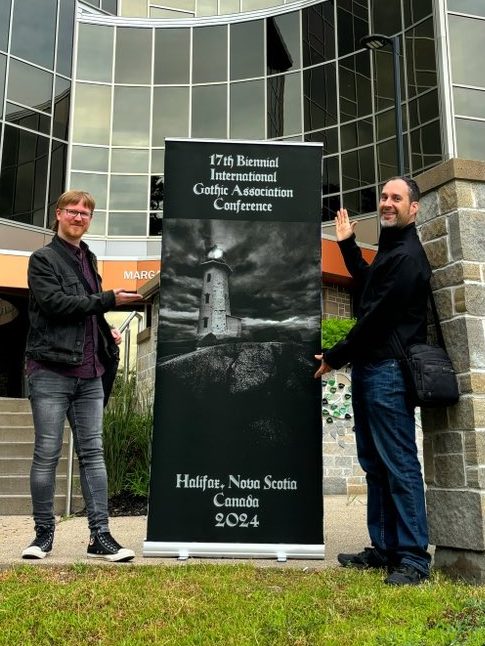
Image Credit: International Gothic Association via Twitter
How does the IGA aim to support burgeoning Gothic researchers?
“We have a host of schemes aimed at supporting early career researchers, from travel bursaries that encourage attendance at the conference to small pots of money to bolster PGR-led conferences or symposia and an essay prize for the best essay.”
He continued, “Our membership rates also have to be one of the lowest -under £10 for unsalaried members and students – a deliberate decision intended to make it possible for PGRs to join. It is worth noting that the fees we charge primarily fund our flagship journal, Gothic Studies (https://www.euppublishing.com/journal/gothic), which proudly publishes a significant number of articles from early career scholars.”
Image Credit: International Gothic Association / Gothic Studies Journal
What is it about the Gothic that makes it every bit as relevant now as it was during the birth of the genre?
“I like to think of the Gothic as the dark side of culture, those aspects that are pushed aside, seen as too transgressive or subversive. Much of the thrust of contemporary Gothic studies is to centre on those occluded and repressed histories and identities, using the Gothic as a critical lens that allows for the expression of that which has not been acceptable or mainstream.
The Gothic has always appealed to the outcast and the nonconformist, and there is definitely a revolutionary spirit to much of it – a desire to denounce inequalities and expose forms of tyranny.” Xavier explained.
“It’s not a coincidence that autocratic governments have typically censored the horror genre. I’m sure I don’t need to spell out why these qualities make the Gothic particularly timely for us today. On a more personal note, I understand the Gothic to be about fear, a defining human emotion, and about empathy. If the Gothic ever disappears, we should worry: it might be an indication that something fundamental about us has been transformed irrevocably.”
If you had to choose, is there a particular text that you would consider to be most important or influential to the genre?
“The strictly academic answer would have to be Horace Walpole’s The Castle of Otranto, typically seen as the origin of the Gothic novel as we would come to theorise it and a source of inspiration for many of the authors who would later develop equally significant Gothic romances. The nineteenth-century Gothic trio is also foundational: we are still beholden to the ideas and legendary characters introduced in Mary Shelley’s Frankenstein, Robert Louis Stevenson’s Strange Case of Dr Jekyll and Mr Hyde and Bram Stoker’s Dracula.”
As for contemporary horror, I think the legacy of Stephen King’s vast oeuvre will be felt for decades to come.”

Image Credit: Lewis University / 2019 IGA Conference
What have been your proudest moments as co-president of the International Gothic Association?
“At the end of every IGA conference, there will always be a group of first timers who have clearly had their world rocked by the experience. Seeing the excitement in their eyes at finding a community where they can just be themselves and come together to share their passion reminds me of my first conference, where I felt the same way.
“The IGA is a professional family for me, so I look forward to the conferences more for the human value than their content. They have become a bit like school reunions or Christmas dinners, in a way. It makes me proud to see everyone thriving and enjoying themselves.”
What could someone interested in the Gothic gain or achieve from joining the IGA, and how can they go about joining?
“Although the heart of the IGA is scholarly debate, the papers are broad and engaging enough, as many of us are used to presenting to a general public, that they should appeal to anyone with an interest in the Gothic.
“It’s worth reminding readers that presenting at the conference is not a requirement, you can just come along for the experience – and that we accept papers that come from creative practice and performance standpoints. Every IGA I’ve been to has been a great cross-section of where the Gothic is at theoretically, artistically and politically. Finally, it’s a great place to network. I’ve met many colleagues and collaborators there. As ex-president Catherine Spooner once put it, maybe it’s because goths wear our trauma on our sleeve, but we are a remarkably cheerful and welcoming community.” He said.
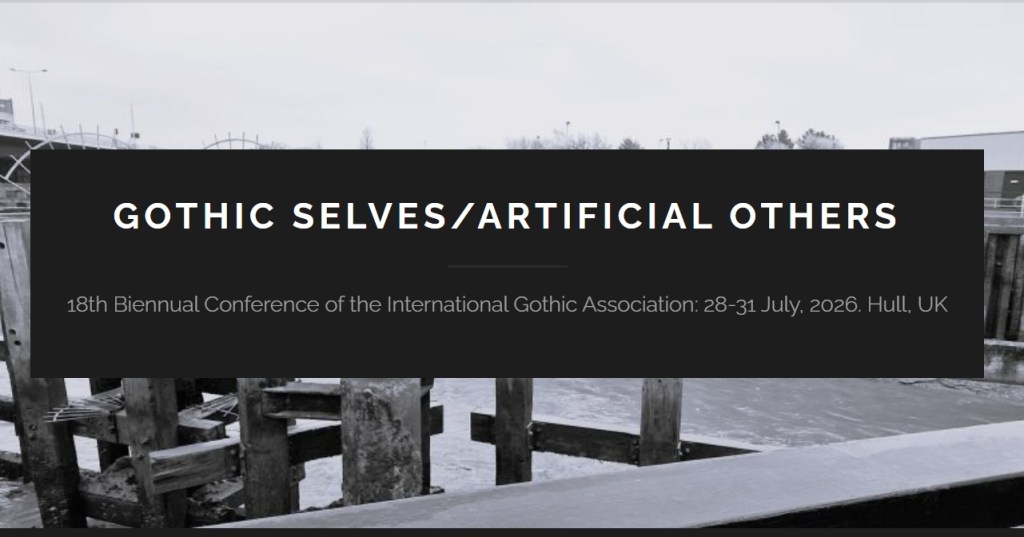
Image Credit: Manchester Centre for Gothic Studies
“Our biennial conference helps us grow numbers organically.” Xavier continued, ” I’m hoping that, as we continue to expand and become even more international, we start getting applications to host the conference in countries we haven’t been to yet and can come into contact with new scholars, thinkers, artists and performers.”
The next International Gothic Association conference is scheduled for the 28th July 2026 and will focus on the topic, “Gothic Selves, Artificial Others.” You can find out more and become a member via their website, www.globalgoth.org/join/.
Featured Image Credit: International Gothic Association




 The Mourning Paper