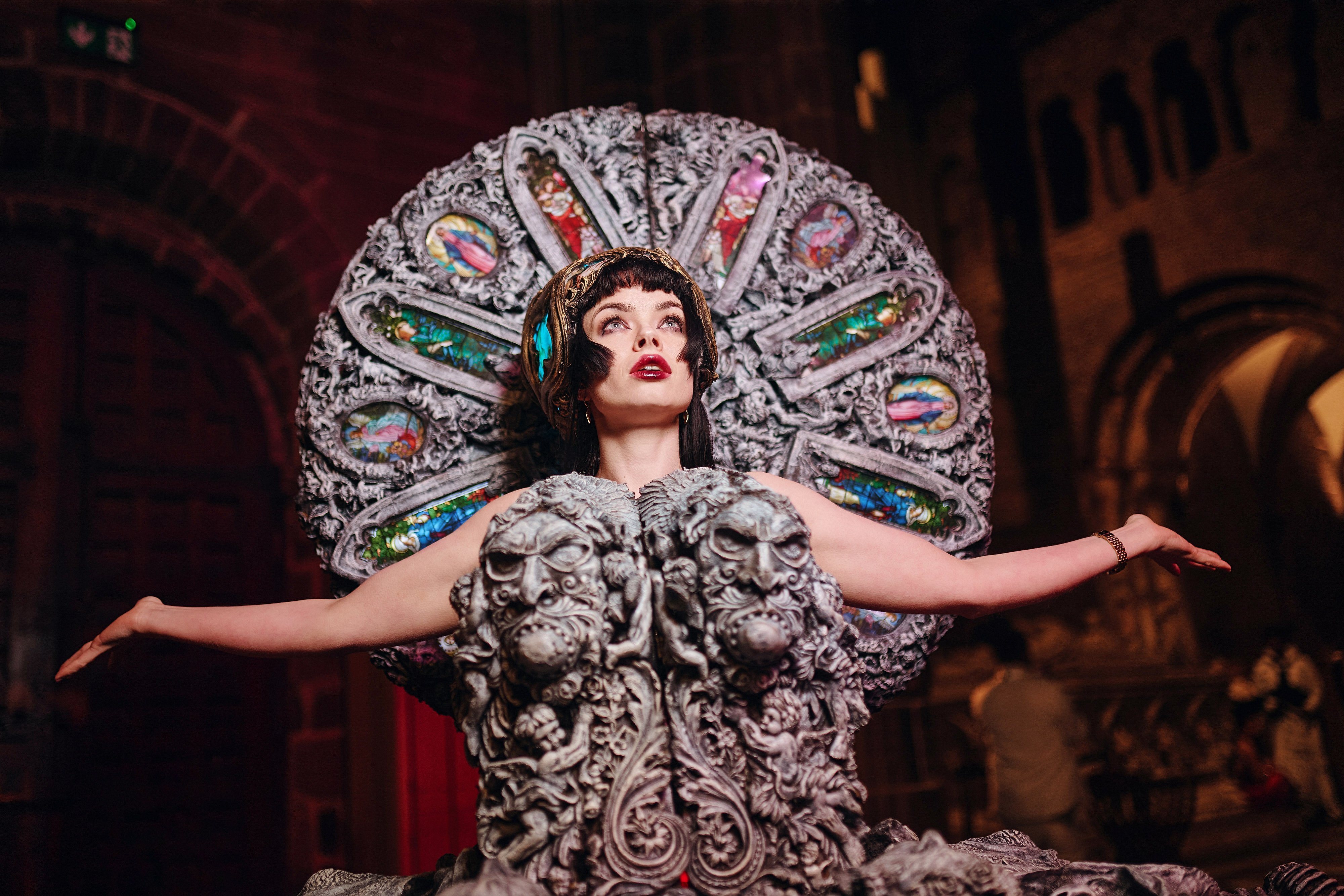
Over the past few years, I have spread my wings as a baby bat and thrown myself into the Goth scene. From markets to conventions, getting involved in the culture has been a wonderful experience and has helped me express myself in more ways than I could imagine. Before this, however, my studies in Heritage in Tourism led me to discover a fascinating gothic activity that explores the darker parts of our world, that being Dark Tourism.

Image Credit: Greyfriars Kirkyard / The Alternative Guide
In summary, Dark Tourism examines historical and contemporary sites that deal with elements of death, war, and scenes of national disaster or infamous individuals. Scotland boasts a range of Dark Tourism sites:
- Greyfriars Kirkyard holds a sordid history of captured Covenanters during the 17th century, many of whom suffered from being frozen or starved to death, locked in a field next to the graveyard. If not, they were executed at the request of the then Lord Advocate George Mackenzie (who locals believe still haunts Greyfriars to this day).
- Culloden Battlefield stands as the final site of the Jacobite Uprising, which took place all the way back in 1746. Despite the battle only lasting for roughly an hour, around 1500 Jacobites were slaughtered by British troops, marking it as the last conflict fought during the Rebellion.
- Glencoe Valley was the location of the Glencoe Massacre of 1692, where 38 members of the MacDonald Clan were slaughtered by government troops for failing to meet the oath of allegiance deadline set by King William III and Queen Mary II. The massacre violated the tradition of Highland hospitality after the Clan was murdered under a trusting welcome.
Each of these sites is rich in history and showcases how much variety Dark Tourism encapsulates, but there are many more examples from across the world, which I will delve into for future writings.

Illustration by Edward Macmillan
Initial Discovery through Personal Research
Finding this area of tourism came about when preparing my Heritage Portfolio,
researching Italian migrant experiences of Scotland surrounding World War Two, and exploring various sites with renewed context.
The Arandora Star Memorial, for example, serves as a reminder of the hundreds of migrants, ranging from Italian to Jewish, who were forced onto ships to return home due to Scottish mistrust, before being torpedoed by a German U-Boat moments after departure. Today, the memorial sits next to St Andrew’s RC Metropolitan Chapel in Glasgow, comprised of several mirrored blocks which bear the names of the victims, constructed in a way where you can always see them through both physical and conscious reflection.

Illustration by Edward Macmillan
Additionally, Orkney’s Italian Chapel was constructed by Italian prisoners of war who were shipped in the thousands from North Africa to construct the Churchill Barriers to defend Orkney from naval invasion. The Chapel was built with two nissen huts as the base, and other materials such as spare concrete and scrap metal to cover the base. Despite the grim context of its construction, the Chapel remains to this day and serves as a reminder of peace between Italy and Scotland, and the importance of keeping faith
in difficult times.

Illustration by Edward Macmillan
The Appeal of Dark Tourism
As referenced in the title, I would describe Dark Tourism as a tangible example of morbid curiosity. Whilst the subject matter surrounding these sites can be heavy in tone, there is an underlying fascination with these locations as they metaphorically place a mirror in front of us to confront our own mortality. Whilst sharing the appeal of educational enrichment of other heritage sites and museums, the emotional connection that visitors can form (especially individuals of shared ancestry) helps to enrich the experience beyond viewing darker aspects of the world.

Image Credit: Trevor Vannoy
I have always had a love for history, which often goes hand in hand with the
macabre, an interest that has only grown stronger for me over the years following my academic studies, with a renewed understanding of how dark tourism can connect with us.
For anyone seeking to learn more, I would highly recommend “I Am the Dark Tourist” by H.E. Sawyer as a primer for reading material, or the Dark Tourism website developed by Peter Hohenhaus for a comprehensive guide to dark tourism locations all across the world (https://www.dark-tourism.com/).
Featured Image Credit: Unsplash/Chelms Varthoumlien