Taxidermy and Goth are, historically, deeply intertwined. There are many ways in which they are interconnected, such as art, literature, and media. In my book ‘Art and Aesthetic Values of the 21st Century Counterculture: Taxidermy & Goth’, I cover this in further detail. ‘Taxidermy & Goth’ was my master’s degree dissertation topic in Environment, Culture & Society, which meant I had 5 months to research this topic as deeply as I could before submitting it for examination. In this piece, I will briefly discuss some of the ways that taxidermy and Goth are intertwined and the cultural significance of this.
Taxidermy is linked to gothic counterculture due to the golden era of taxidermy occurring within the Victorian period. Its peak was at a time when mourning was normalised and prolonged. However, the roots of taxidermy are less morbid and lie within the natural sciences. Taxidermy was used to preserve animal specimens for study and display. During this time, taxidermy branched out into subgenres, including anthropomorphic, rogue, and pet taxidermy. Anthropomorphic taxidermy is the artistic display of preserved animals carrying out “human” tasks. Rogue taxidermy is a modern term and refers to the use of preserved animals in unexpected ways. Lastly, pet taxidermy is the preservation of animals kept as pets as a way of honouring them or mourning a loss. These subgenres can all overlap.

Image Credit: Diana (Didsss) / Pexels
Taxidermy saw a decline over the first half of the 20th century as a result of the World Wars. But since the turn of the 21st century, there has been a taxidermy renaissance, with the art quickly coming back into fashion.
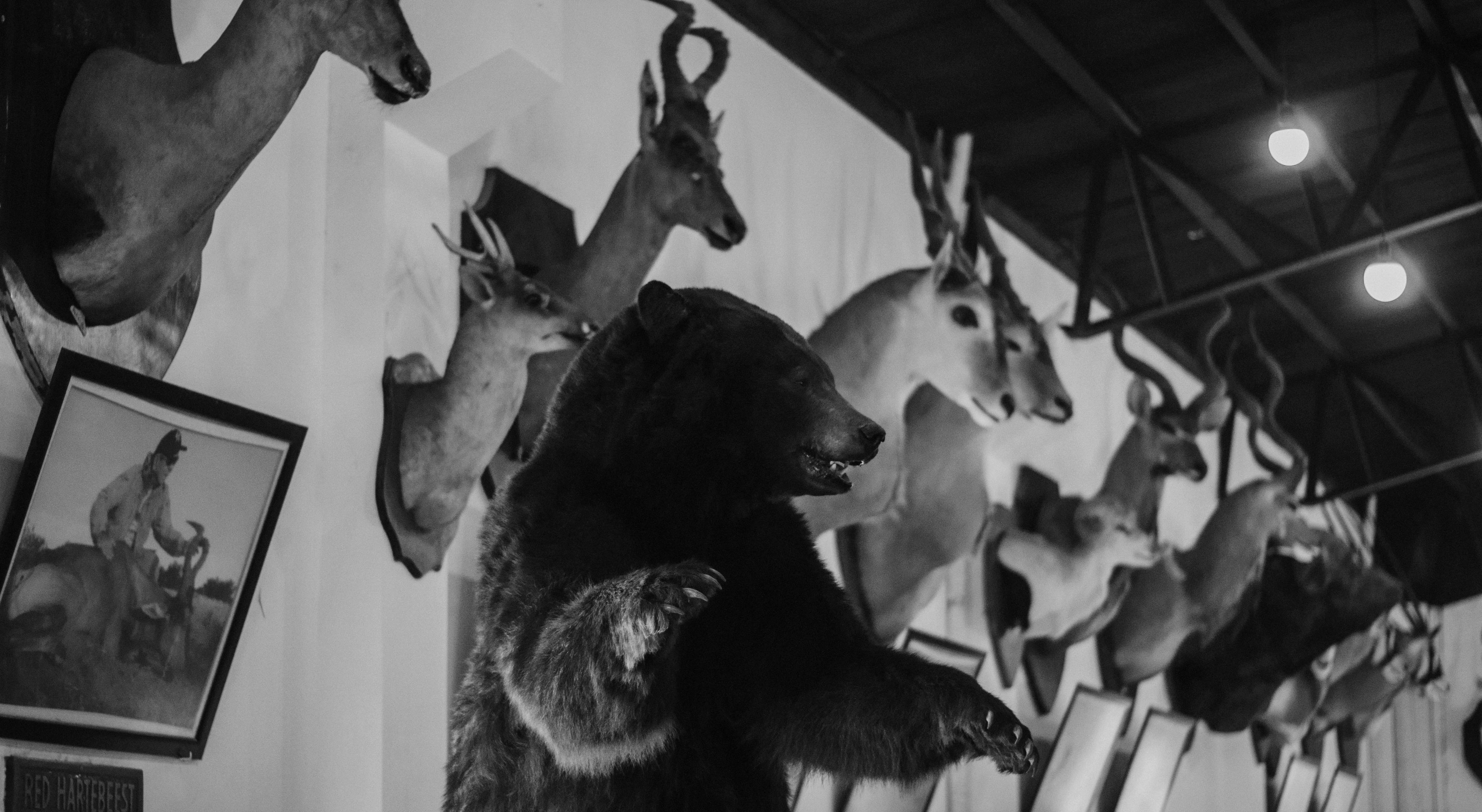
Museums remain a great way to explore vintage taxidermy, highlighting how much artistic skill is needed to make the animals look life-like. They also show how easy it is to make an animal look deformed or botched.
However, Taxidermy hasn’t just been limited to museums and was and still is a popular home item. The appreciation of the animal’s beauty, the honouring of the animal’s life, and the appreciation of the artwork needed to create these pieces are just some of the reasons why taxidermy is used as décor. Usually, decorative taxidermy is associated with the macabre and morbid due to the popular sport of trophy hunting. However, there has recently been a rise in the ethical stance against taxidermy in the recent taxidermy renaissance. In my book, I got to discuss this with a few taxidermists.

Image Credit: Sóc Năng Động / Pexels
These morbid and macabre connotations have been there essentially from the start. Pioneering gothic authors from the 18th century have used the creepy connotations of taxidermy to add atmosphere to their creative writing, for example, Horace Walpole with The Castle of Otranto. As a pioneer of the gothic literary subgenre, he used taxidermy to create unease, heavily influencing the creepy and macabre association with taxidermy. Moving on to screenplays, Alfred Hitchcock’s Psycho (1960) uses an abundance of taxidermy within the scenes, making it a motif. This is very much the same for The Texas Chainsaw Massacre (1974) by Tobe Hooper, highlighting that once again, the pioneers of gothic media type used taxidermy and reinforced the negative connotations surrounding it. The media usage of taxidermy stretches further into shorter form content of music videos, with the most notable being The Cure, who used taxidermy in their music video for the song The Lovecats.

Image Credit: Psycho (1960), Shamley Productions
Meanwhile, in the art scene, taxidermy has become more and more popular, with many artists using only ethically procured animals or vintage taxidermy to create artwork. I explore pieces that range from the anthropomorphic works of Walter Potter to the Victorian era, to the rabbit toasters and mouse strippers found in contemporary times. I also explore the truly morbid side of the taxidermic art, with gory pieces and themes of death being a common theme alongside animal products utilised to make usable items, like bags.
The gory taxidermic art produced by Angela Singer conveys the gory reality that is trophy hunting culture and how humans have irreversibly interfered with animals. The statement taxidermy piece produced by the Dutch artist, Tinkebell, highlights how differently we treat animals from ourselves; as some we deem suitable to use as a resource, while others are deemed too precious to ‘use’. Rogue taxidermist, Jack, or more well known as WorldAroundEwe, is known throughout the internet for his viral taxidermy art. This art ranges from covering toasters with rabbit fur to making pencil cases from rats. He is also known for his multi-animal ani-malgamtions. Artists like him have combined the macabre themes of taxidermy with an artistic outlet, making an artistic counterculture that brings unconventionality and discomfort to the forefront. They celebrate many of the key pillars of gothic counterculture, allowing this cultural crossover to be possible.

Image Credit: WorldAroundEwe
As part of my research, I reached out to multiple taxidermists and animal artists to understand more about their feelings towards this art form. The questions I asked ranged from the ethics of their work to their feelings on counterculture and whether they feel part of it. I explore these conversations with taxidermists more in my book “Taxidermy and Goth”, available
Taxidermy and gothic counterculture have been interlinked since their beginnings; firstly through gothic literature, which brought the links between taxidermy and villains together, then taxidermic art facilitated a crossover between taxidermy and gothic counterculture implicitly through shared key characteristics. These links include love for the alternative, dark, and unconventional. Blending life and death as a duality within artistic outlets is considered outside of the norm; the uncomfortable truths behind taxidermy are what turn people away, aligning it with the gothic. The practice’s connotations to not only death but also life and mortality make it a uniquely unconventional art form.
‘Art and Aesthetic Values of the 21st Century Counterculture: Taxidermy & Goth’ is available now on Etsy.

Image Credit: Emma (@all_flesh_rots) Via Instagram
Featured Image Credit: Thegian Sepillo / Pexels