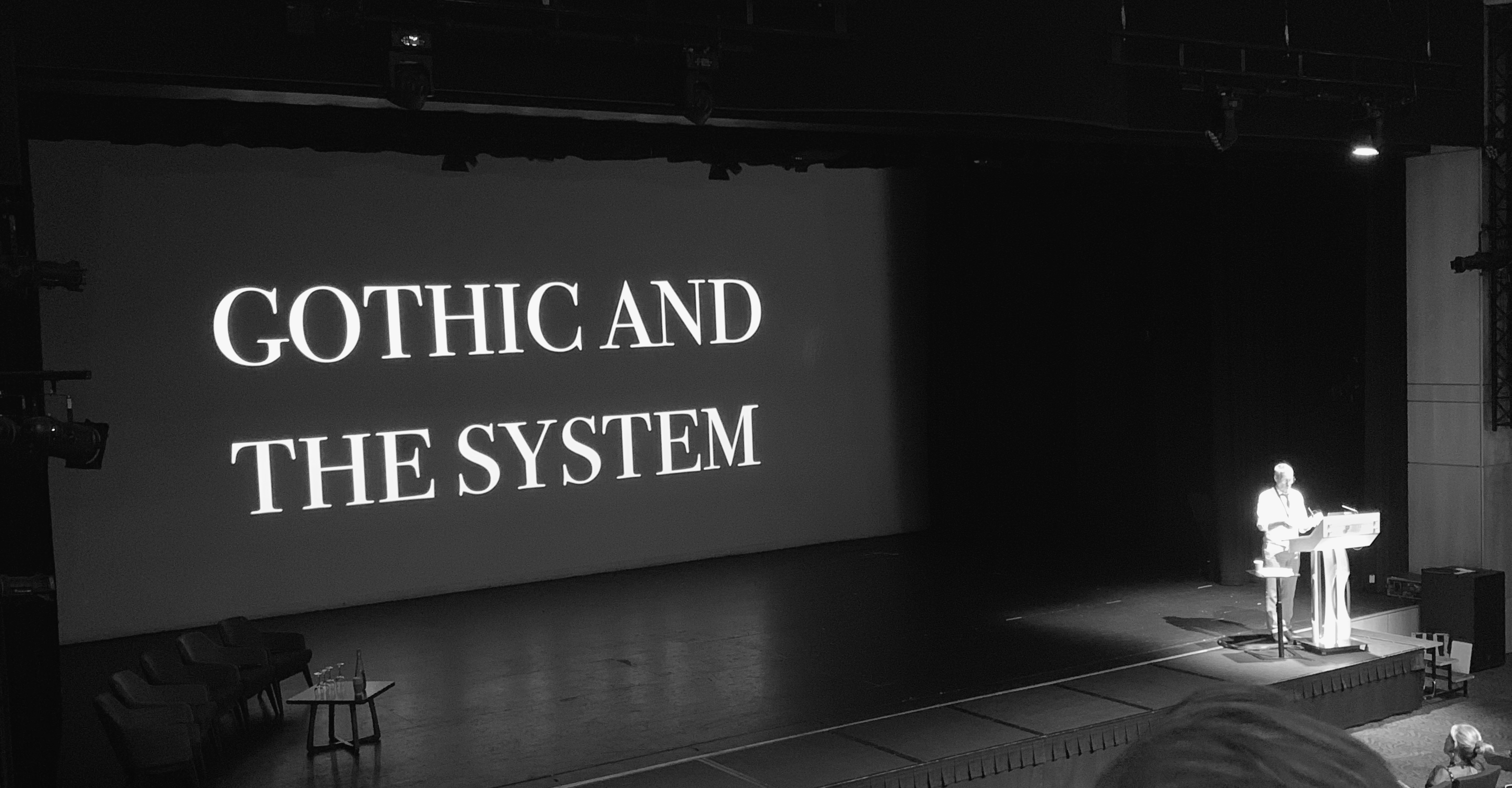
In October 2025, I saw that the International Gothic Association (IGA) had put out a call for papers to be presented at their conference in July 2026. At the time, I was around a month into a Masters programme studying weird fiction, a sub-genre of Gothic literature, and, given that I wasn’t quite drowning beneath the workload yet, I thought, ‘a twenty-minute presentation on something I’ve been studying for two years? Aye, I could do that.’
I decided to submit an application, and for the next two months I focused on my coursework until I got an email around Christmas saying my abstract had been accepted. I was ecstatic. ‘Holy shit,’ I thought, ‘I get to go to an academic conference and present my own research.’ Then I quickly realised, ‘holy shit, I have to go to an academic conference with tenured academics, who know more than me and will judge my own research.’
Despite knowing how lucky I was to have my paper selected and how big this step was in my academic career, as the conference crept nearer that excitement was tempered more and more by nerves. I was stressing about the deadline and balancing it around work and feeling the pressure to write the paper well. Imposter syndrome kicked in when the conference programme was announced and I saw the highly specialised subjects that professors and PhD candidates from around the world (some of whose work I had even studied) would be discussing.

I had no idea what any academic conference would even look like, never mind one where around 400 people were attending. In my mind, I was just some wee goth guy from a scheme outside of Glasgow; how would I fit in with all these academic types? As I finished my paper through a combination of sheer obstinance and caffeine, I tried to stop overthinking it all, worried I’d end up dreading going to the conference instead of being buzzing about it. So, when the time slots for the panels (the groups of presenters for each topic) were announced for our presentations a couple of weeks before the event, I forced myself to switch off from thinking about it. I resolved that when the conference started on Tuesday 28th of July, I’d just keep my head down and try not to expose myself as an academic fraud until my panel on the Friday morning. Then I’d rattle through my presentation, and by Saturday I’d be home and could stop stressing.
With that attitude staving off my nerves, I got the train to Hull, still overthinking and thus reworking the slides for my presentation (as well as low-key stressing out my partner) the entire train journey down. After ditching our stuff at the hotel, I dragged her to come with me to scout out the University of Hull, hoping that familiarising myself with the place would make me feel more comfortable. While floating around, we happened to meet the conference organiser who, despite attending to some last-minute details himself, was extremely friendly. He took the time to welcome us and tell us some more about how the conference would actually run. The panels would run simultaneously, with only three people presenting their work per panel, so thankfully I wouldn’t be confronted with all 400 attendees at once. He also told us about the entertainment events happening throughout the week, like the pub quiz and the Goth disco. When we left him to do what he needed to do, his excitement had proved to be a bit infectious.

As we started heading back to the hotel, we bumped into a friend who was also presenting her work at the conference. This friend was a very highly regarded member of the IGA and a world-renowned professor. So when she said she was going back to her hotel to actually finish her paper that night, I can’t deny I didn’t feel a monumental sense of relief. Knowing that even people in her position were stressing over their presentations and that I could now spot at least two friendly faces amongst the other delegates, the conference was starting to feel a little bit like a festival holiday rather than an academic gathering.
When it started the next day, that was exactly the kind of atmosphere it had, like a very nerdy Download. When we arrived, we were given our printed programmes and lanyards as well as cool little IGA tote-bags which the hundred or so people already there were sporting. Although it was a ‘Gothic’ conference, I was worried that my attempt to aim for a ‘corporate-goth’ look might end up looking like I was about to announce “it’s not a phase, mum”. But seeing how many overtly alternative people were there immediately made me feel more at ease.

After everyone arrived, the organiser delivered the welcome address, followed by the first plenary speaker of the conference, presenting on ‘Alien: Earth and the Anthropocene.’ Afterwards, we were ushered to an outdoor BBQ and bar on campus. It’s probably been easy to tell from reading this far, but in the interest of transparency, I get nervous around people. I normally mask around people I don’t know, especially in big crowds. But after having watched everyone else freely approach each other and having a calming pint of Kopperberg, I followed my partner’s lead and introduced myself to a few people.
What struck me first was that everyone I spoke to just assumed that I belonged there. Having only ever been a student, I was used to the kind of teacher-student dynamic you have in university when talking to professors and more senior students. But here, people were treating me like an equal straight off the bat, asking what I researched or even what I taught. I was surprised that when I was chatting to these professors and renowned scholars, I didn’t feel like an idiot, and I could actually follow what they were saying about their research. Whenever I mentioned to anyone this was my first conference, they were either super encouraging and welcoming, or if it was their first time at the IGA too they seemed happy to find someone else in the same boat.
I caught up with my friend who introduced me to some more people she knew, and I spent most of the evening talking to them. What I really didn’t expect about mingling with them, and everyone else for that matter, was just how little of the conversation was spent talking about academic stuff. I spoke to someone about a gig it appears we’d both been to in 2023, someone else about Final Fantasy 7, books, games, all sorts of stuff that I really hadn’t anticipated chatting about at an academic conference. It felt like having those kinds of deep chats with your friends about the things you mutually obsess over. Honestly, I think that meeting people on the first night was one of the first times in my adult life I didn’t feel like I had to immediately put on a face to fit in. Substantially more comfortable and far less agitated, I was buzzing for the rest of the week.

Around five to six panels were running for each time slot of the conference, besides the plenary speeches, which were given their own dedicated time slot. As much as I’d have loved to attend all of the panels, I chose to attend ones that were either relevant to my own research or that addressed subjects I had a particular interest in. Having never been to an event like this, I had kind of assumed that people would mostly be speaking about Gothic literature, presenting research they had done in a similar ‘I-sat-in-a-room-and-read-and-pondered-it-till-I-got-it’ kind of way. So while I saw on the programme that there would be an extremely diverse range of research topics, I wasn’t prepared for people to present in such different styles. Some people read from detailed scripts, some were flamboyant and energetic, and some were a bit of both. Their styles of delivery didn’t detract from the quality of their work. Seeing all of these different, equally engaging styles and the supportive reception they received was extremely encouraging to me, given how agitated I was about my own presentation. Similarly, anyone I spoke to, whether professors, professionals or students, all quite openly admitted to being nervous too. That level of honesty was refreshing, and I think it made it feel more like these people were members of a community rather than delegates at a conference.
On Wednesday, the presentations on the ‘Vampiric Others’ panel gave me a deeper appreciation of how literary portrayals of vampires are more relevant as cultural metaphors than ever. That day’s plenary speaker spoke about Dungeon Crawler Dave and Drew Hancock’s 2025 movie Companion before someone discussed how ‘The Amazing Digital Circus’ allows people to understand fractured selfhood. The ‘Games and Interactive Gothic’ panelists covered tabletop roleplaying game Vampire: The Masquerade and feminine portrayals in horror games like ‘Layers of Fear’. On Thursday, I was enthralled with a talk addressing how creepypastas could be used to understand human relationships with technological devices. Later, there was a roundtable discussion where people who had written chapters for The Cambridge Companion to World-Gothic Literature discussed recontextualising the Gothic genre’s Europe-centric roots. That was followed by another roundtable discussion hosted by The Internet Ghost Collective, who spoke about how the Gothic is practiced rather than just consumed as media. There was even an interactive panel on the Friday run by ‘Danse Macabre’, a research project looking at how the Gothic and dance overlap. While I can’t say doing toe stretches in a pair of New Rocks at a dance class was on the cards for my first conference, this was a hell of a lot of fun. The sheer scope of research at this conference really showed just how culturally important and applicable every part of the Gothic is, and it was incredible to see so many passionate people prove that.

On Wednesday night, the IGA’s postgraduate reps led us through Hull for about half an hour like some kind of weirdly jovial funeral procession to the pub quiz. With people looking forward to a drink after the heatwave in Hull, the atmosphere for the suitably gothic-orientated quiz was more palpable than the first night. Our team won second place and won a bag of skulls (just throwing this in for bragging rights, I guess). I think that achievement was eclipsed by ‘The Bram Strokers’ winning the best team name, though. Thursday was a free night for the delegates to entertain themselves, which, to everyone else, meant exploring Hull, but for me, it portended nothing but the return of anxiety. I went back to the hotel and practised my presentation ahead of Friday morning. I timed how long it took to read my script: seventeen and a half minutes. Perfect. I timed how long it took to speak my script: I ran out of time halfway through. Shit. I manically read and re-read my paper, tweaked sentences, trimmed parts of my slides, had maybe around three mental breakdowns, and probably smoked a full vape in about three hours. But given that I was speaking on the second panel, I had to be up early, so I accepted defeat around midnight.

After getting disproportionately annoyed about my hair not behaving or my shirt not sitting right in the morning, I got to the university and grabbed some breakfast before sequestering myself to a quiet corner of the campus. I still feel bad for missing the first panel that day, but I was freaking out. The bullet points were throwing me off track; I went for a walk that ended up being a march around the campus, and I listened to my gym playlist hoping to hype myself up. I feel sorry for my partner having to deal with that level of neuroticism in 28-degree heat. But quarter past ten rolled around, and I’d run out of time to do breathing exercises. Having met the person chairing the panel, the other panelists, and seeing that the audience wasn’t too big, I mentally prepared myself to stutter and stumble my way through my first presentation.
I don’t really know what happened when I got up there, but I somehow managed to pull an eloquent, comprehensible, and, dare I say, engaging talk from somewhere. In short, it went far better than I could have hoped. I didn’t stutter, I barely deviated from my script despite hardly looking at it, I made what I felt like was just enough eye contact around the room, covered up my slight blunders with an appropriate level of humour, and paced it well. Maybe I just defaulted to the old sales job patter/bravado or something, or maybe, having studied the topic for so long, my brain had actually retained some of it. And although I was elated to have it over and done with, what made me unbelievably happy was the fact that people seemed to actually resonate with some of what I was saying. After the audience’s questions, several people approached me to ask about parts of my talk. More of a shock was that some of them just wanted to tell me they thought it was great. One person I spoke to who had been in the audience had actually written an article I was quoting in the presentation and who personally knew the author I was discussing. Thank god I didn’t know who they were before speaking; otherwise, I’d have probably had a very different reception. I spent the rest of the day coming down from the adrenaline rush until we had the gala dinner and goth disco that night (which I luckily remained sober for, so I couldn’t undo my glamour of seeming smart).

I’m aware that this has probably sounded like a cliched, optimistic and maybe even romanticised experience, but I can’t say that there’s any embellishment in it. It was genuinely just that good. Attending the IGA conference was probably the best thing I could have done for myself, both on a professional and personal level. Way back in December, my supervisor told me that the people I’d meet would be lovely and that the IGA represents a far more welcoming, kind, supportive, fun and creative community than any other academic circle he’d been part of. And from what I experienced, he was absolutely right. In the week or so since returning, I’ve kept in touch with a lot of the people I met, exchanging ideas and research but also, just chatting on a more personal level too.

Without trying to make this article too much of a tribute to my own anxiety, I think that if I hadn’t attended this conference, my crisis of confidence was tilting me towards abandoning academia altogether once I had finished my masters degree. Anyone who’s ever been a student knows that when you’re chasing an academic goal it’s easy to become an anti-social recluse without realising it. I think that’s especially true when you’re studying something in the humanities. Whether your particular interest is Gothic literature, film, fashion, etc. it can feel futile to try and chase that on any kind of professional level. But just being at this conference was exactly the kind of experience I personally (and a whole lot more people, I imagine) needed to give me the confidence to realise and chase my potential. The IGA has built a welcoming and accepting space where people not only passionately obsess over the same weird goth stuff that you do, but actively support you to do that professionally. It was the easiest time I’ve ever had getting along with other people and the quickest I’ve ever felt like I actually belonged in a community. I honestly wish someone had said this to me years ago, but if you’ve ever thought about joining the IGA or attending events like this, if you’ve hesitated or let imposter syndrome stop you from giving it a try, I implore you to do yourself a favour and just go and do it. Just take the plunge. you won’t regret it.
Featured Image Credit: The Mourning Paper